

Edit September 5th: this has happened and was a great success! We were silent and our surroundings were loud, and luckily the studio was quiet so we had a deep experience, by ourselves and together. Most likely more to come!
It is quite a delicate thing, to organize something I'd like to see myself in the Netherlands most. I love all (well most..) CI events, and I do also have a specific wish and desire to go deeper into the experience.
Late July I will go to Norway for a week of full silence and CI, and no classes or focalising at all. I've never experienced this before, and am slightly nervous and also excited!
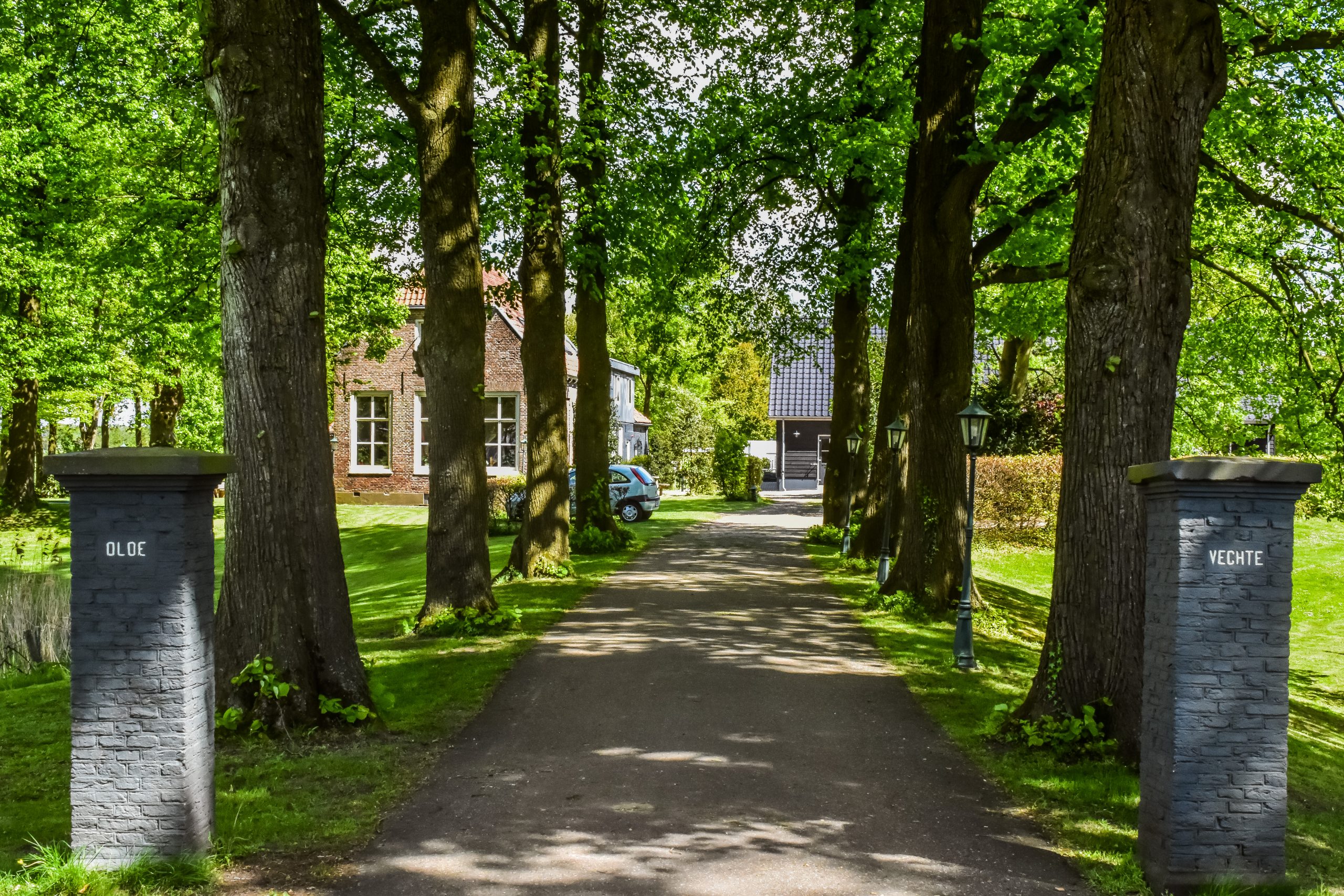
The IN SILENCE Contemplative CI meeting will have focalisation in the morning, and some in the afternoon. The Jams and the in between time will mostly be contemplative, meaning in silence, if you want to. There will also be spaces where one can talk and share.
So if you are up for pioneering a (semi) silent CI meeting in the Netherlands, I'd love for you to join us!
It will be a somatic journey into Contact Improvisation, where movement, stillness, and deep connection intertwine. Guided by Alessandro Rivellino, this gathering invites dancers to refine presence, sensitivity, and experience the poetry of perception.
Organizing together with my friends: Alessandro, Lana, Erica and Karka. Really looking forward!
If you register via Life is a Jam - mention it in the registration form and get a EUR 20 discount! (on top of the current early pricing)
Have a look at the delicious proposal we prepared: IN SILENCE website
Looking forward to pioneer with you!
Have you even been in an "Underscore Jam"?
An Underscore comprises over 20 "phases", each represented by a unique glyph, guiding participants through a spectrum of dynamic states—from introspective, quiet moments to high-energy, interactive exchanges. This structure encourages dancers to explore various aspects of movement, awareness, and connection. Not everything phase needs to happen, but hearing them, or seeing them depicted helps greatly to become more aware of them.
So far when engaging in Underscore jams I have found that my quality of attention is blissfully continuous. Its one big wave of presence from beginning to end. In 'regular' jam encounters and experiences are more like fleeting sentences. Sometimes with interpunction, other times each moment a new chapter.
The themes of presence and attention in a jam are of interest to me, and I find it worthwhile to explore them in order to keep CI jamming fresh and joyful. Jamming as life, with a continual commitment to come back and engage with what is present.
CI and Meditation: Mindfulness in Motion
CI shares common ground with meditation, focusing on present-moment awareness and non-judgmental observation. Personally I find that my internal dialogue is dancing along most of the time, with questions like, "Does this work?", " Do I like this?", "Wait what?", or "Oh cool! Again! Ahh missed the moment.."
By viewing Jamming as meditation I feel I am more prone to acknowledge my thoughts, and realise there is much more to perceive. Like gravity, momentum, other people, skin, connection and many other sensorial qualities. Realising that my internal dialogue is also part of the dance, it allows me to become more attuned to my internal state and the evolving dynamics of the jam space and others. Recognizing my thoughts and perhaps getting to know my own "known or unknown scores"—the preconceived notions or spontaneous impulses guiding movement—it opens the space for more authentic presence and interactions.
Undoing the Need to "Do"
If I'm honest, I find there’s often an urge in dance—and in life—to act, to initiate, to make something happen. But do I always need to? What happens if I simply let movement emerge, rather than forcing it? Sometimes, the richest dances come from allowing stillness, from tuning in rather than reaching out. "Being" can be just as powerful as "doing."
Then, how to do the undoing, or undo the doing? Any thoughts? :-)
Experimentation and Curiosity
Experimentation and curiosity are at the heart of CI. Martin Keogh speaks about "leaning into what we don’t know," embracing uncertainty rather than shying away from it. In a jam, we can explore without a set goal—testing weight, balance, speed, and stillness. What happens if we wait? If we don’t move at all? If we move in a way we’ve never tried before? CI invites us to be both scientist and artist, constantly discovering new ways to relate to ourselves and others.
Mindset and Motivation
Movement doesn’t always need an external push. Sometimes it arises from within—a breath, a shift in attention, a shared moment of stillness. Other times, it’s sparked by others energy or the sensation of weight and resistance. But what if nothing moves us? Can we stay present even in stillness, alone or with another? These moments of pause are just as much a part of the dance as the more obvious movements.
Music in CI
Music in CI is a choice. Some jams embrace silence, allowing dancers to fully attune to each other’s breath and micro-movements. Others bring in live musicians or carefully chosen tracks to influence the flow. The key is awareness—music should support, not dictate. What does the soundscape bring to the dance? Does it invite softness, wildness, stillness? Or does it distract?
Setting Intentions for the Space
Before entering a CI jam, it helps me to pause and ask: What’s my intention? Am I here to enjoy movement? To connect? To surprise myself? Some things I have tried or want to try:
Contact Improvisation is a practice of presence, curiosity, and trust—both in ourselves and in the dance that unfolds. The more we let go of the need to "do," the more space we create for discovery.
We are dancing artists exploring science and creating art :-)
Below are the notes I took from an interview with Steve Paxton. He describes his "ideal dance".

Two people come together into touch and spend ±20 minutes hardly moving.
just bonding, somehow
Then - slow movement
Following as intimately as they can the point of contact
extremely slow
slower
slower even..
When they find each others small dance
a shimmer of movement
then we can start dancing with that size of movement
really tiny, recognizing each other
Then the dance starts to get bigger and faster
it should retain the qualities that were found in the first 20 minutes
with identification of that persons smallest movement units and the speed and clarity that comes with that
This creates a "third force"
something between the two people that is not controlled by either one of them
The basic thing is how can both people
follow each other
How can we have not leader / follower
But follower follower
(Thank you Steve)


Hello sweet dancing creatures!
Some of you know me as Thijs, and others have seen me swirl by as a tall creature with a red beard. We might have met in a dance, movement or just happened to be in the same space at the same time.
Most of us reading this have been engaged with contact improvisation for quite some time. I've been practicing for about ten years now. My journey started with weekly lessons with Tim. In the early years, I rarely attended jams, feeling utterly intimidated by the experienced dancers swirling around. It reminded me of my time with Ecstatic dance, where connecting with others felt difficult. Everybody seemed to have fun and able to connect with others, yet I couldn't get myself to make to first move. However, with Tim's support, I slowly began to integrate into the CI community.
CI (luckily) is an "open" form that is not copyrighted or defined in one specific way. We can all practice in any way we want. My interest and focus has shifted quite a bit over time. In the beginning it was very much about surviving the classes without bruising myself too much. So much has changed since then! Now, I met a lot of people in the jam spaces before and feel comfortable in the space most of the time. In dances I feel I have options to move slow or fast, modulate tonus and and meet others. Stirring up dance trouble or melt in fluid group harmony is also great fun. In general I really really enjoy jamming. It feels good on a physical, emotional, creative and somatic level. Cant remember a jam that I not enjoyed or not felt good afterwards.
A question that often arises for me is: do I "loose" myself in a dance? And do I want that? Initially, I would lose myself completely, becoming a flowing, moving entity. However, as my practice matured, I found a balance where my body and mind can somewhat keep up with the dance's intensity without losing myself. Then if "loosing" myself of not the point perse, then what is? So this made me curious. Why do I / we Jam?
I've asked this question to a few people in the community, and here are their thoughts:
Lana: I go to jams to express, to experience freedom, to connect and revise the material that I have in my body. To me it’s a huge playground where spontaneity is released to the full, where I play with reflexes, reactions, impulses from within and from outside.
.
Antonio: The reason why I jam is because generally I'm interested in free form of improvisations, in both, music and dance as I practice both. That is why I connect even to a deeper level either in a jam with no music or with live music, where a new space of co-creation, at times of instant composition my rise. Often I do not like "playlist jams". Often my interest for jamming comes from movement, though you never know what may happen while literally "in touch" with someone else. Through touch senses get activated and may trigger different layers of the body, at time can get emotional, at times sensual, or wild, playful or rather meditative. If one is really open, anything can happen. This is mainly the reason why I jam and never get bored about it. If it would ever get bored, I can't blame the dance form, but my process. (I can be boring!) Does that make sense?
.
io: Every time I step into this remarkable universe called jam, I am confronted with its twofold nature. On one hand, this unique and extremely unusual space unfolds on the dance floor, reminding me of the measurement infrastructures of what is normal and acceptable. At times, it still feels strange, especially if I abandon my sensations and get into my head, where judgment is rolling the party. On the other hand, the naturalness of the contact and the architecture of movements radiate everything but strangeness. The normality of it is undeniable. I remember when I just started doing CI, I’d share with people my fascination and say, “I am built for this.” This statement still holds; each time I am rolling over the floor, unfolding into a tapestry of dots, I experience this intrinsic match within my body in relation to others and the world at large. For me, it has to do with my readiness to show up in openness and naturalness, be seen in those qualities, and take responsibility for the impact. Dancing is not always easy, as it has to do with being seen, deconstructed to the points of contact. I am reminded of my existence in relation to others, which shines light on my relation with myself. As beautiful as it can be, it is not always comfortable. At times, touching the real is intense, yet knowing that it is there, ready to meet me, is precious.
For me personally, the motivation to jam varies. Sometimes it's about self-care and softness, while other times it's about connecting deeply with others and exploring the creative possibilities of the space. Jamming feels to me like a mirror, reflecting my inner state and allowing me to engage with my feelings and creativity. I could share a lot more, and probably will at some point.
Why do you Jam?
